
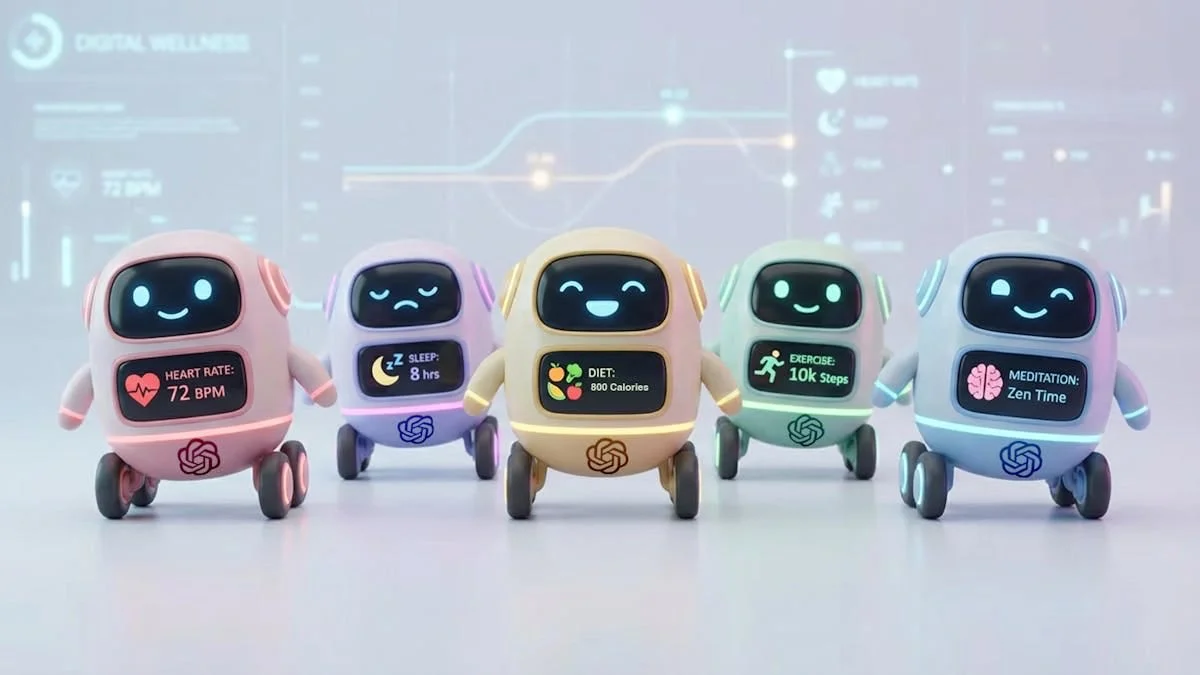
The rapid rise of conversational AI is profoundly transforming access to medical information and preventive care. What was once a marginal use case is now becoming a true entry point into the healthcare journey for hundreds of millions of people.
A new global health interface
OpenAI estimates that over 230 million users ask ChatGPT health-related questions every week—a staggering number that illustrates the normalization of digital habits in the pursuit of well-being. This phenomenon extends the “Dr. Google” reflex of the 2010s, but with a much more conversational, personalized, and reassuring approach.This trend reflects a major cultural shift: people no longer just search for symptoms—they want to understand, contextualize, and anticipate. Conversational interfaces are becoming a trusted channel between the public and healthcare stakeholders.
The big tech offensive
In response to this transformation, major AI labs have launched an unprecedented offensive. In January 2026, OpenAI unveiled ChatGPT Health, a dedicated space for health-related conversations, complete with enhanced privacy protocols. Shortly after, Anthropic introduced Claude for Healthcare and Life Sciences, and Google showcased MedGemma 1.5, its model capable of interpreting 3D imaging and histological slides.This race reflects Big Tech’s ambition to become the preferred access interface to digital health services, with a key strategic stake: controlling data flows and patient trust.
Record adoption across the healthcare sector
According to Menlo Ventures, nearly 22% of healthcare organizations have already deployed domain-specific AI tools—a sevenfold increase since 2024. Once seen as a laggard in innovation, the healthcare industry is now adopting AI 2.2 times faster than the broader economy.This acceleration is driven by the promise of an augmented medicine: automating administrative tasks, assisting with diagnosis, enabling smart patient triage, and supporting continuous monitoring through connected devices.
Redefining the patient experience
Next-generation assistants like ChatGPT Health, Claude Health, and MedGemma already help users to:- prepare consultations;
- analyze lab results;
- track health indicators (sleep, activity, blood pressure);
- or provide long-term coaching for wellness goals.
Ethical and regulatory challenges
Despite its potential, conversational AI in healthcare raises critical concerns: medical accuracy, data reliability, and misinformation risks. Regulators such as the MHRA in the UK remind users that no chatbot should replace professional medical advice.Companies are pledging to strengthen transparency, encryption, and safety mechanisms, but trust remains a fragile cornerstone of this new digital era. The question of who owns, trains, and interprets health data is still open—at the heart of a global ethical debate.
Toward a new health-technology balance
Conversational AI doesn’t replace healthcare professionals; it complements them by streamlining access to information and helping prioritize care. It could eventually become the first point of contact before entering the healthcare system—a role as promising as it is delicate.Platforms like Leadkong.com are already supporting this digital shift by helping healthcare players create reliable, educational, and EEAT-compliant content—a key factor for building trust between technological innovation and public health.